This post may contain affiliate links, meaning we may make a small commission on items purchased through links in this post at no extra cost to you.
Pattern Overview
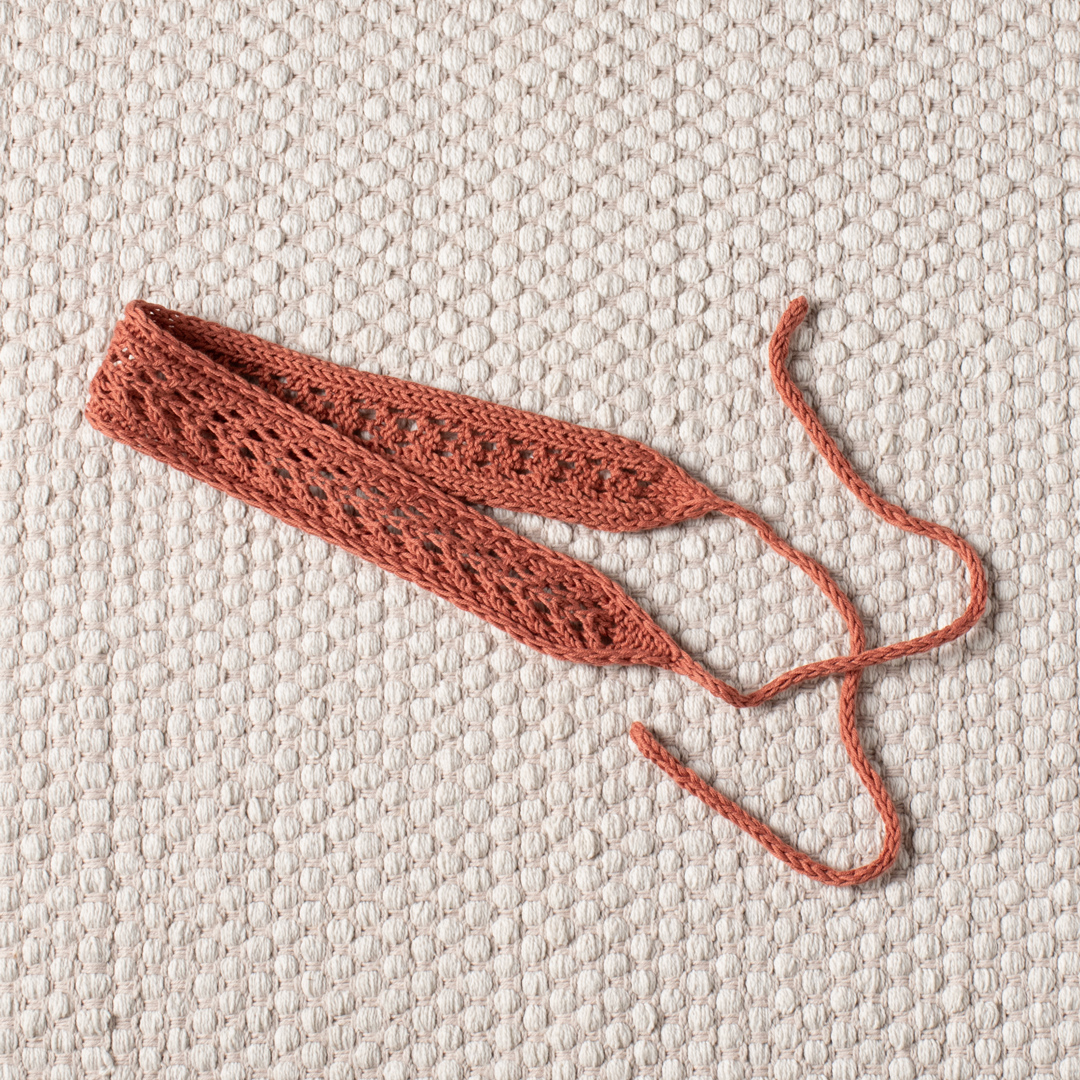
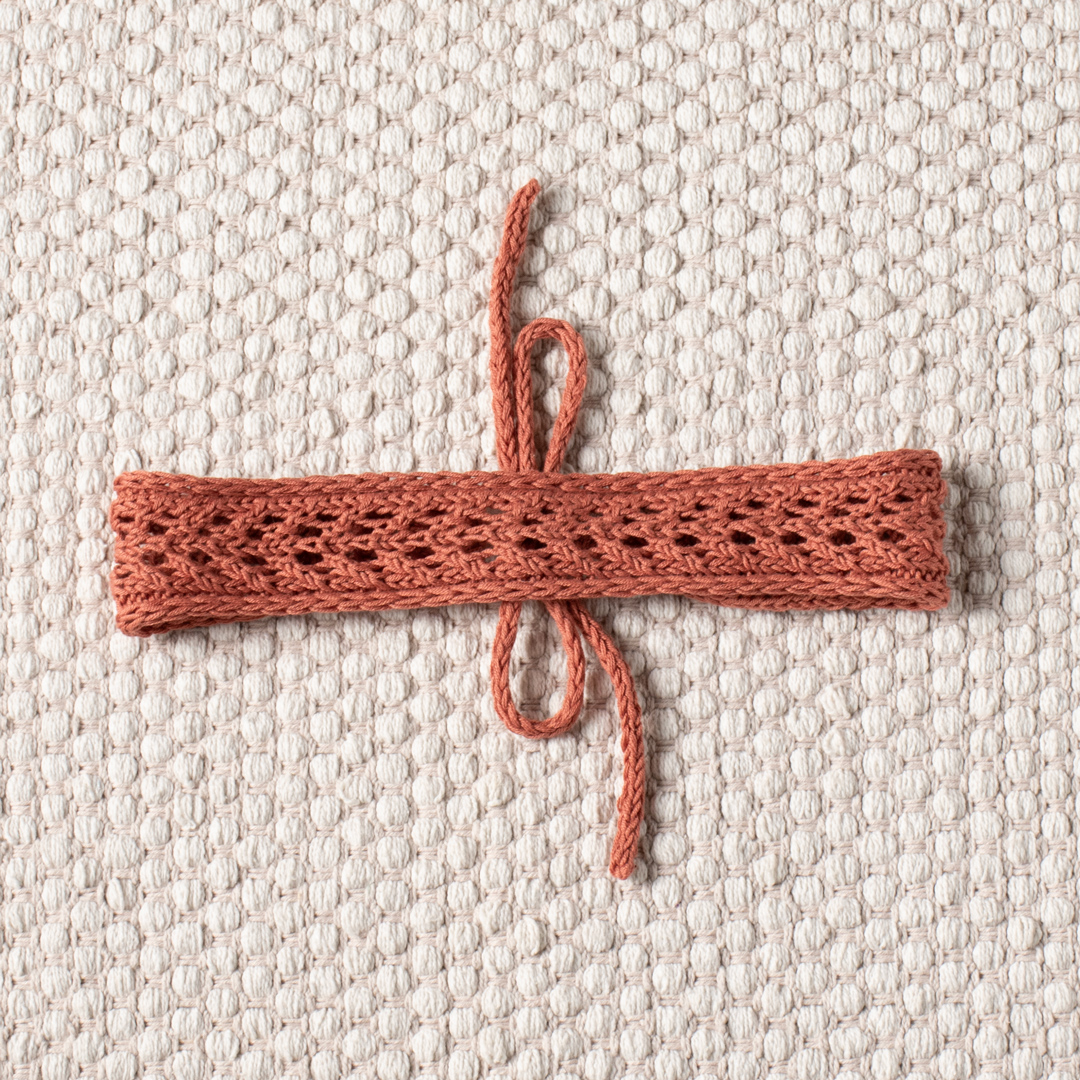
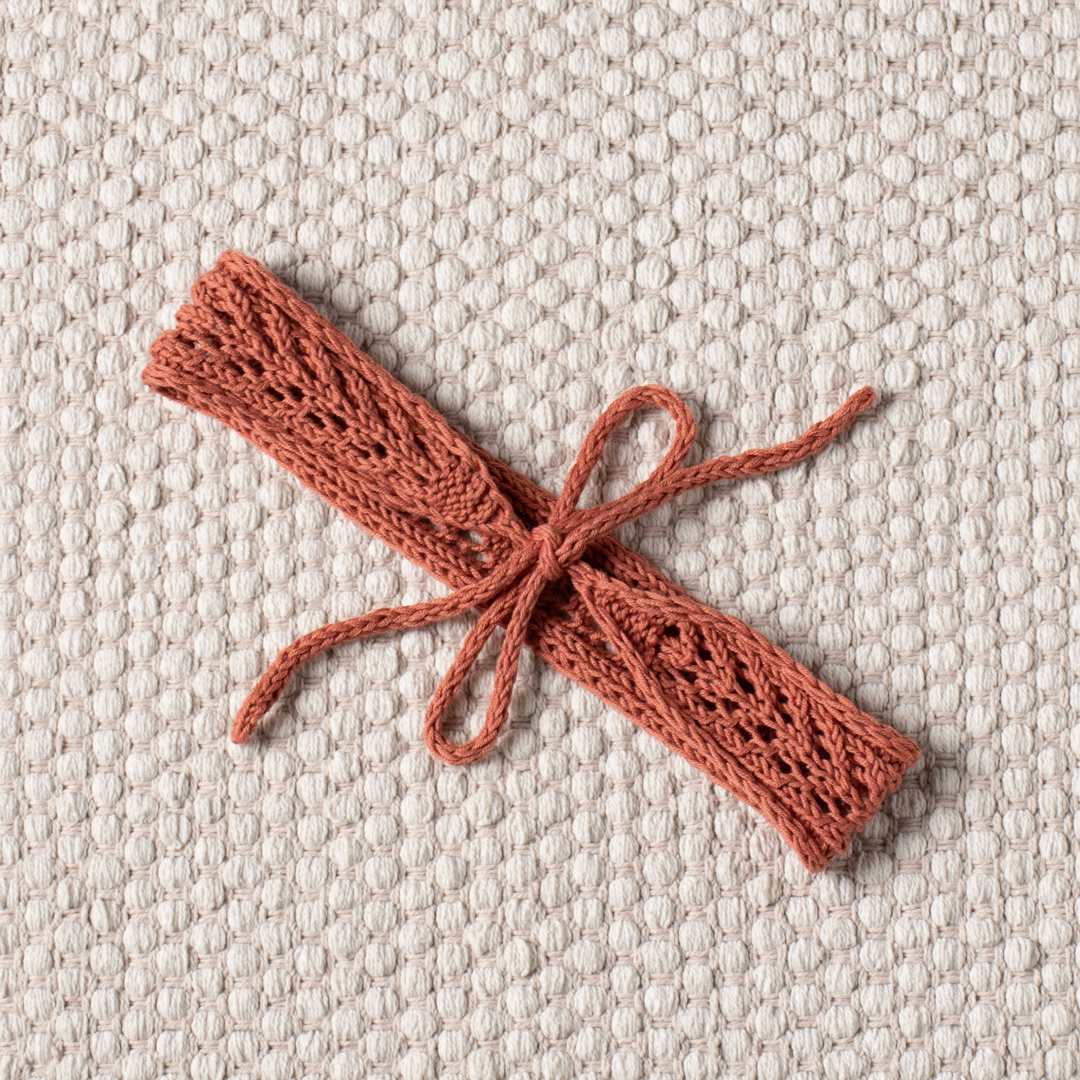
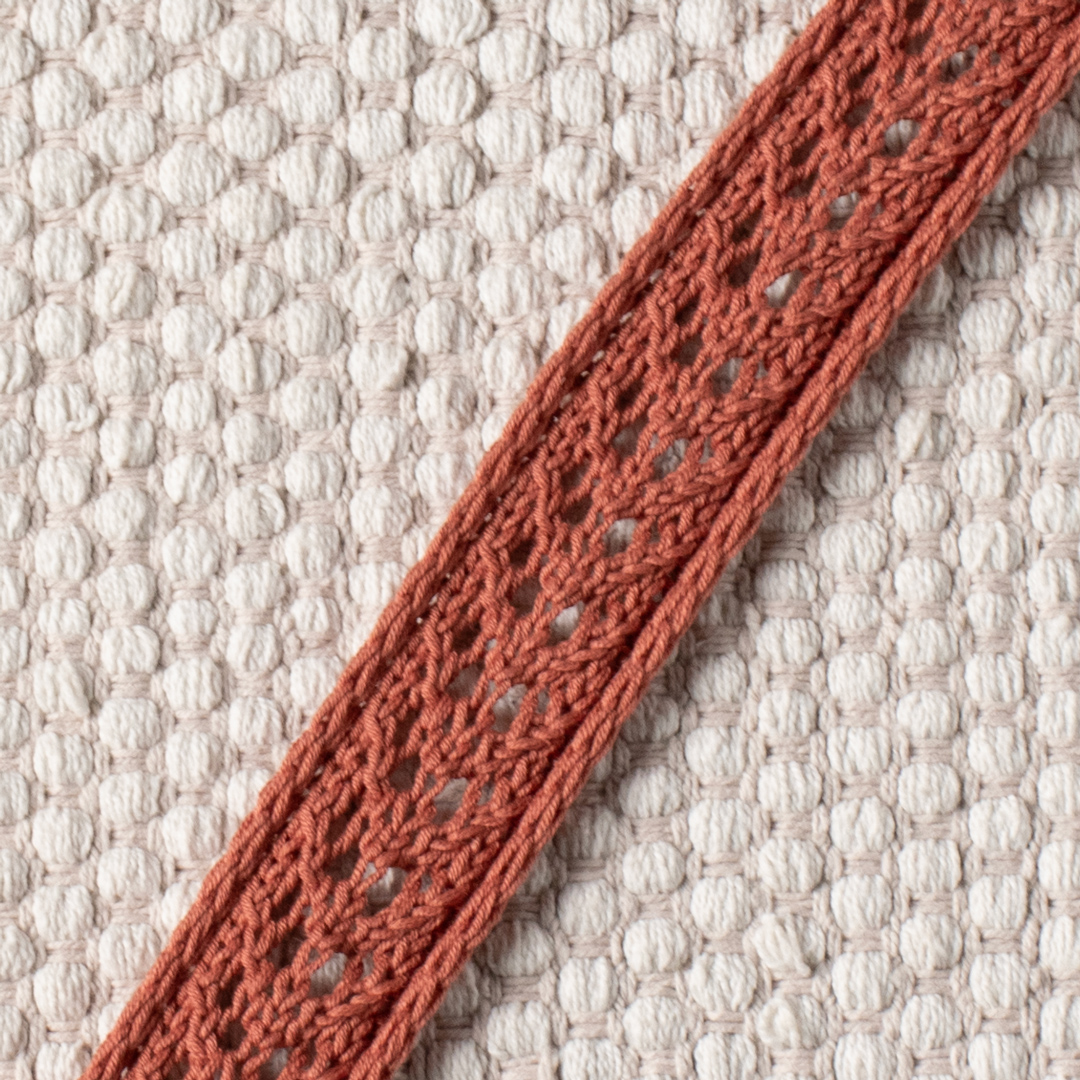
The Heat Wave Headband is a quick summer knitting project. This headband features a simple lace stitch on a reverse stockinette background.
The headband is knit back and forth. It starts with the first i-cord tie, then it grows with increases on the right side. When you reach your desired length, you will decrease the stitches and knit the second tie.
You can easily modify the size of your headband by adding or subtracting pattern repeats.
The first and last 2 stitches form an i-cord edging, which makes the edges look neat and prevents them from curling.
Size
One size.
Finished measurements:
Length without ties: 46cm/ 18in.
Width: 4.5cm/ 1.75in.
Gauge
10 x 10 cm (4x4in) = 24 sts x 32 rows in stockinette stitch after blocking.
Yarn
Drops Safran in the color red clay (uni color 59), 1 ball.
Needles
3mm (US 2.5) knitting needles.
This project includes i-cord ties that are best worked with DPNs.
Notions
Tapestry needle, measuring tape, and scissors.
Abbreviations
k – knit.
k2tog – knit 2 stitches together.
M1L- make 1 left.
M1R – make 1 right.
M1pL – make one purl left.
M1pR – make one purl right.
p – purl.
p2tog – purl 2 stitches together.
RS – right side.
sl – slip stitch as if to purl with yarn in front.
ssk – slip 1 stitch knitwise, slip the next stitch knitwise, return the 2 stitches back to the left needle, knit those 2 stitches together through the back loops.
WS – wrong side.
yo – yarn over.
*-* – repeat the instructions in between the asterisks the number of times specified.
Pattern notes
Do not tighten the edge and increase stitches.
If you want to simplify the pattern, you can replace the purl increases – M1pL and M1pR – with M1L and M1R. To simplify it even more, replace the M1L/M1R with yo.
To make the headband longer – add more pattern repeats, to make it shorter – substract pattern repeats. One pattern repeat is 4 rows.
Be sure to check out other spring/summer headband knitting patterns.
Save this post for later!
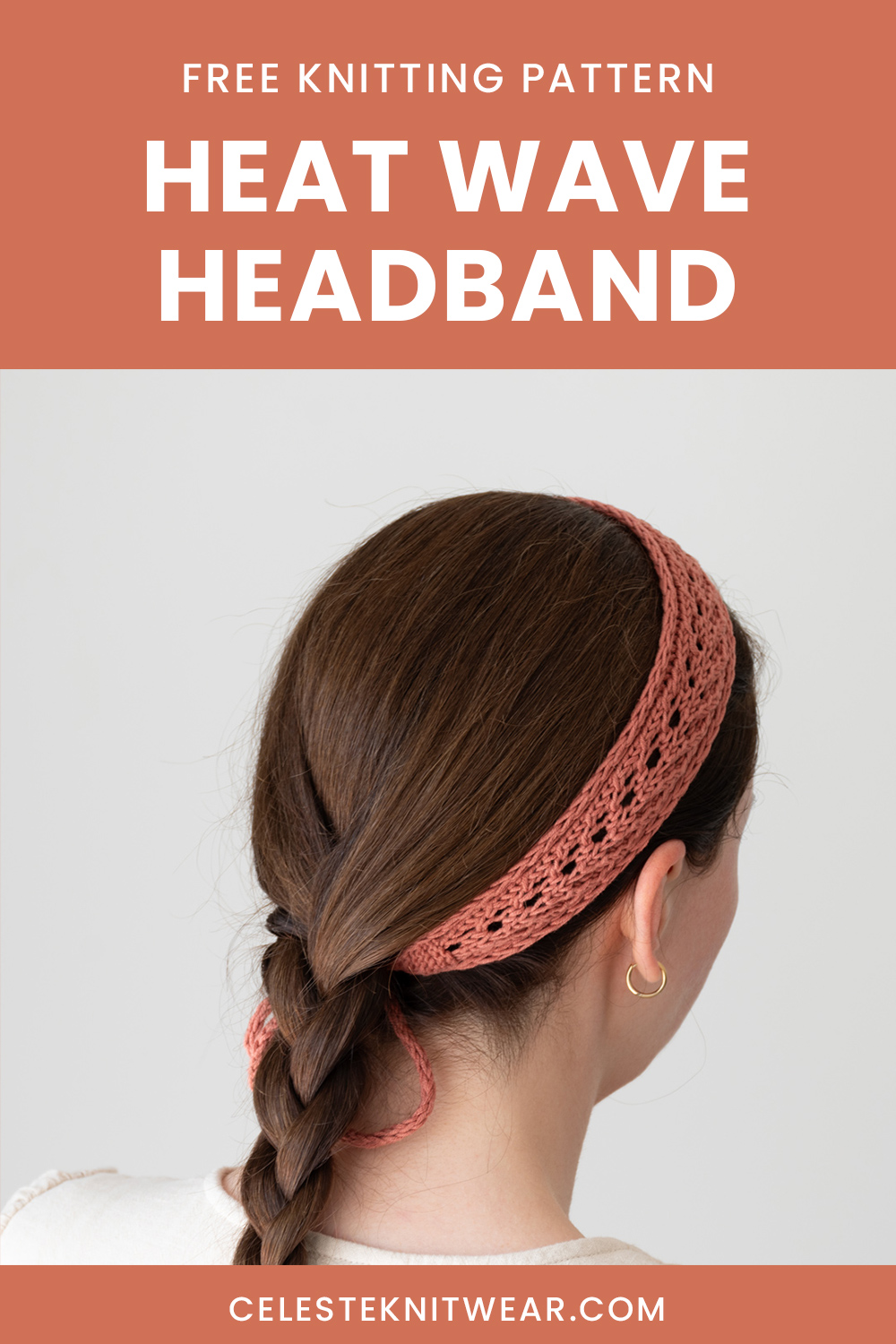
HEAT WAVE HEADBAND KNITTING PATTERN
First i-cord tie
Related: How to knit an i-cord.
Cast on 3 stitches, do not turn.
*Slip the 3 stitches to the right side of the needle. Knit 3.*
Knit the i-cord until the tube measures approximately 30 cm, slide the 3 sts to the right side of the needle, do not turn.
Headband
Increase section
Row 1 (RS): k1, M1R, p1, M1L, sl1 (5sts).
Row 2 (WS): k3, sl2.
Row 3: k2, M1pR, p1, M1pL, sl2 (7sts).
Row 4: k5, sl2.
Row 5: k2, M1pR, p3, M1pL, sl2 (9sts).
Row 6: k7, sl2.
Row 7: k2, M1pR, p5, M1pL, sl2 (11sts).
Row 8: k9, sl2.
Row 9: k2, M1pR, p1, k2tog, yo, k1, yo, ssk, p1, M1pL, sl2 (13sts).
Row 10: k4, p5, k2, sl2.
Row 11: k2, M1pR, p1, k2tog, yo, k3, yo, ssk, p1, M1pL, sl2 (15sts).
Row 12: k4, p7, k2, sl2.
Main pattern:
Row 1 (RS): k2, p2, k1, k2tog, yo, k1, yo, ssk, k1, p2, sl2.
Row 2 (WS): k4, p7, k2, sl2.
Row 3: k2, p2, k2tog, yo, k3, yo, ssk, p2, sl2.
Row 4: k4, p7, k2, sl2.
Repeat rows 1-4 27 more times or until you reach your desired length.
Repeat rows 1-2 1 more time.
Decrease section
Row 1 (RS): k2, p2tog, k2tog, yo, k3, yo, ssk, p2tog, sl2 (13sts).
Row 2 (WS): k3, p7, k1, sl2.
Row 3: k2, p2tog, k2tog, yo, k1, yo, ssk, p2tog, sl2 (11sts).
Row 4: k9, sl2.
Row 5: k2, p2tog, p3, p2tog, sl2 (9sts).
Row 6: k7, sl2.
Row 7: k2, p2tog, p1, p2tog, sl2 (7sts).
Row 8: k5, sl2.
Row 9: k1, p2tog, p1, p2tog, sl1 (5sts).
Row 10: k4, sl1.
Row 11: ssk, p1, k2tog (3sts).
Do not turn.
Second i-cord tie
*Slip the 3 stitches to the right side of the needle. Knit 3.*
Knit the i-cord until the tube measures approximately 30 cm. Bind off, cut the yarn, and weave in the tails.